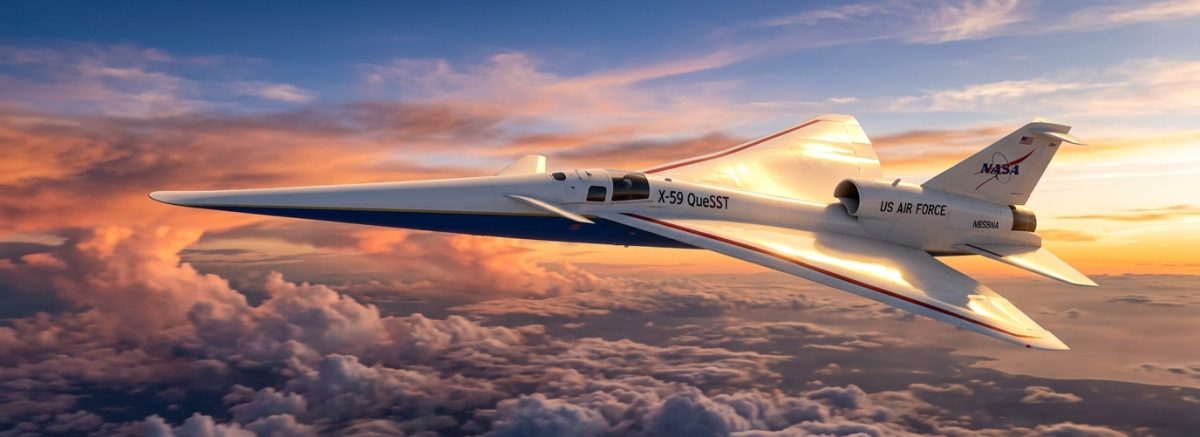
NASAs X-59 Poised for First Supersonic Flight
NASA is on the cusp of a significant milestone in aviation innovation as the agency prepares to push its groundbreaking X-59 QueSST (Quiet SuperSonic Technology) jet beyond the sound barrier for the first time. Following a series of successful test flights that have seen the experimental aircraft reach speeds close to Mach 1, engineers are in the final stages of preparation for its next big challenge: achieving supersonic flight by exceeding the speed of sound, specifically aiming for Mach 1.6 at around 60,000 feet in altitude.
The X-59, developed by NASA in collaboration with Lockheed Martin, is not just a technological marvel; it represents a potential paradigm shift in commercial air travel. One of the primary objectives of the X-59 project is to demonstrate that a supersonic passenger aircraft can operate over land without causing disruptive sonic booms, which have traditionally made supersonic flight unsuitable for commercial aviation in populated areas. Instead of the loud sonic boom that typically accompanies supersonic travel, the X-59 is engineered to produce a much quieter sound, likened to a “thump.” This innovation could pave the way for the return of supersonic air travel over land, enabling airlines to significantly reduce flight times on long-haul routes without disturbing communities on the ground.
NASAs ambitious testing plan includes a series of flight tests that will not only verify the aircrafts aerodynamic performance but also ensure the accuracy of data that will be gathered to inform future supersonic transport designs. As part of its mission, the X-59 will fly with an array of sensors designed to measure the sound produced during supersonic flight, providing crucial data that will help engineers refine the design of future supersonic commercial jets.
The X-59s design features advanced materials and aerodynamic shapes that contribute to its supersonic capabilities while maintaining fuel efficiency. Its slender fuselage and innovative wing design aim to minimize drag, allowing the X-59 to fly more efficiently than traditional jets, which is essential for commercial viability.
As NASA gears up for the historic flight, the organization emphasizes the strategic importance of the X-59 project not only for technological advancement but also for enhancing the overall experience of air travel. If successful, the X-59 could open a new chapter in aviation that combines speed with sustainability, potentially reshaping the landscape of global travel.
The testing phase is carefully monitored, and updates on progress will be shared with the public as NASA continues to assess the aircrafts performance and safety metrics. In summary, the X-59 QueSST is poised to challenge existing norms in commercial aviation and could herald a future where supersonic travel becomes an everyday reality, connecting people around the globe in significantly shorter times than currently possible.