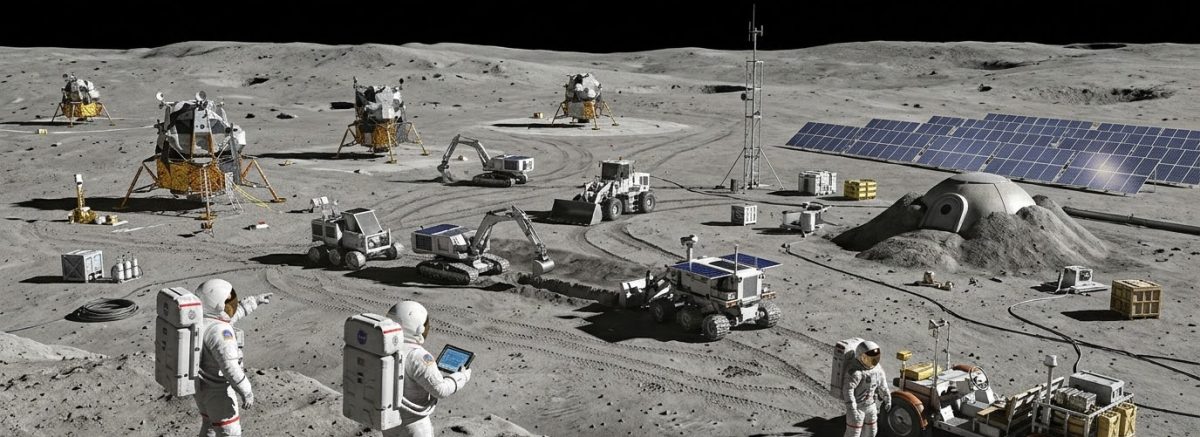
NASAs Lunar Base Development Advancing with Over 20 Planned Landings
NASA is in the process of laying the groundwork for an ambitious future Moon Base through a series of innovative robotic missions and advanced commercial landers, aiming to enhance lunar exploration and pave the way for sustained human presence. With an expansive plan scheduled through 2029, NASA intends to execute more than 20 lunar landings, each designed to investigate various technologies essential for future manned missions.
The upcoming series of missions will focus on testing critical elements such as precision landing techniques, lunar communication systems, and the deployment of rovers. Additionally, these missions will explore advanced power systems and technologies capable of enduring the Moon’s harsh environment, which is characterized by extreme temperatures, radiation, and a lack of atmosphere. The lunar surface presents unique challenges that require innovative solutions to ensure the safety and effectiveness of future explorers.
One remarkable aspect of NASA’s plan includes targeting the far side of the Moon, which has remained largely uncharted when compared to the more familiar near side. This area harbors geological features and potential resources that could be pivotal for long-term exploration missions. In particular, the missions will delve into a unique phenomenon known as magnetic lunar swirls. These intriguing structures, visible from Earth, are thought to be associated with the Moon’s magnetic field and may provide insights into the Moon’s geological history and environment.
The involvement of commercial partners significantly enhances NASA’s lunar exploration strategy. By fostering collaborations with private companies, NASA not only accelerates technological advancements but also reduces costs associated with exploration missions. The partnership aims to leverage the expertise and innovation of the commercial sector to develop reliable and efficient lunar landing systems and additional technologies needed for future operations on the Moon.
NASAs lunar exploration ambitions align with its broader Artemis program, which aims to return humans to the Moon by the mid-2020s. The Artemis program also seeks to lay the groundwork for future missions to Mars, utilizing lessons learned and technologies developed during lunar exploration.
By executing over 20 planned landings, NASA envisions a cohesive strategy where each mission builds upon the last, incrementally paving the way toward a sustainable lunar base. This groundwork is not only essential for advancing scientific knowledge but also for preparing humanity for future interplanetary endeavors, making the Moon a critical stepping stone in our journey to explore the solar system.
As these missions unfold, the global community will be watching closely, as advancements in lunar technology and exploration could have lasting implications for science, exploration, and international collaboration in space. Each mission represents a vital step toward a future where humans can establish a lasting presence on the lunar surface, unlocking the mysteries of our celestial neighbor and expanding our understanding of the universe.