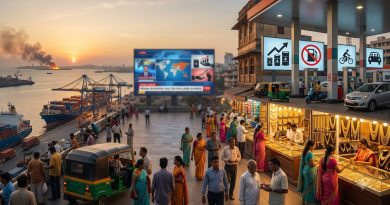
Finance Minister states that trade barriers are the primary obstacle in India-China relations.
In a recent statement, Indias Finance Minister Nirmala Sitharaman highlighted that trade barriers represent the most significant challenge in the relationship between India and China. Speaking at a conference, she emphasized the need for both nations to work collaboratively to address these obstacles, which hinder economic cooperation and growth.
Sitharaman pointed out that despite the potential for increased trade between the two countries, various restrictions and barriers have created a complex environment that limits opportunities. She urged for a more open dialogue to facilitate smoother trade relations, which could benefit both economies.
The Finance Ministers remarks come amid ongoing discussions about enhancing bilateral ties, particularly in the context of trade and investment. India and China, as two of the largest economies in Asia, have a shared interest in fostering a more robust economic partnership. However, historical tensions and recent geopolitical issues have complicated their interactions.
Sitharamans call for addressing trade barriers reflects a broader sentiment among Indian policymakers who recognize the importance of engaging with China not only as a trading partner but also as a key player in regional stability. She noted that overcoming these hurdles would require concerted efforts from both governments to create a more favorable trading environment.
The minister also acknowledged the role of technology and innovation in driving economic growth and suggested that both countries could benefit from sharing knowledge and expertise in these areas. By focusing on mutual interests and addressing trade challenges, India and China could pave the way for a more prosperous future.
As the global economy continues to evolve, the relationship between India and China will be crucial for both nations. Sitharamans comments serve as a reminder of the importance of diplomacy and cooperation in overcoming obstacles and fostering a more integrated economic landscape.