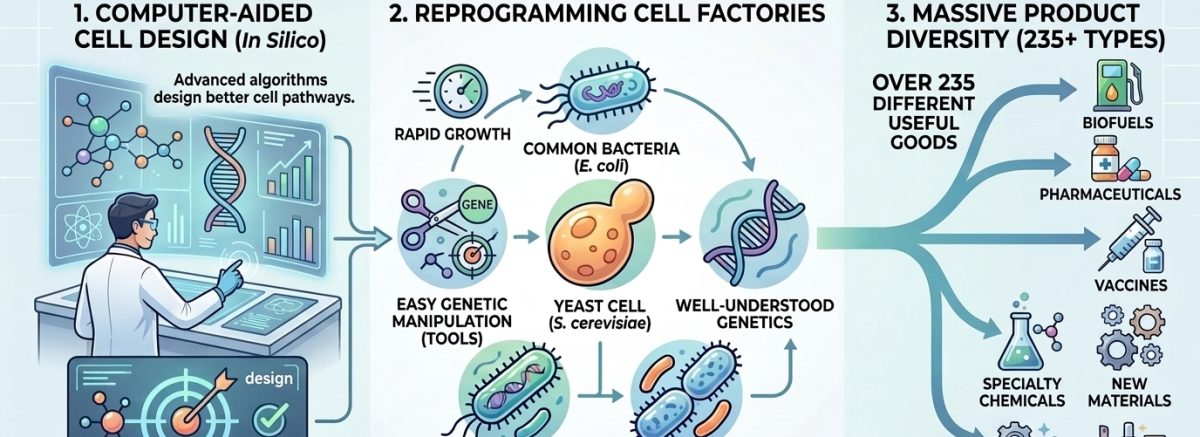
Microbial Cell Factories: Innovations in Sustainable Chemical Production
Recent advances in biotechnology have underscored the potential of metabolic engineering in the production of valuable chemicals from microorganisms. A recent in silico analysis conducted on five industrial microorganisms has identified optimal strains and viable metabolic engineering strategies aimed at the production of 235 distinct valuable chemicals. This study contributes significantly to the growing field of synthetic biology, where microbial systems are optimized for biotechnological applications.
The five microorganisms selected for analysis include *Escherichia coli*, *Saccharomyces cerevisiae*, *Corynebacterium glutamicum*, *Pseudomonas putida*, and *Bacillus subtilis*. These species are well-established in industrial bioprocessing due to their rapid growth rates, well-characterized genetics, and amenability to genetic manipulation. The researchers employed advanced computational tools and algorithms to predict how alterations in metabolic pathways could enhance the production of a wide range of chemicals, from biofuels to pharmaceuticals.
One of the key findings of the study is the identification of particular strain variants that exhibit superior capabilities for producing specific chemicals. For example, mutant strains with optimized metabolic pathways showed promise for more efficient conversion of substrates into target compounds. In addition, the analysis highlighted metabolic routes that can be modified through gene editing techniques such as CRISPR-Cas9, which can introduce or delete genes to streamline metabolic processes and improve yields.
Moreover, the study emphasizes the importance of integrating metabolomics and systems biology approaches to comprehensively understand how modifications impact cellular functions and product formation. This allows for a more nuanced approach to strain development, moving beyond trial-and-error methods to a data-driven strategy that aligns with modern bioproduction methods.
The potential applications of these findings extend across various sectors, including pharmaceuticals, regular chemical industries, and biofuels. The ability to produce 235 different chemicals represents not only economic opportunities but also aligns with sustainability goals by providing alternative methods of chemical production with lower environmental impact.
Overall, the study represents a significant step forward in microbial strain optimization and offers a pathway for developing new bioprocesses to enhance the efficiency of chemical production. As biotechnological methods continue to evolve, research such as this will play a crucial role in meeting the global demand for sustainable and efficient chemical manufacturing. Efforts to transition from traditional fossil-based chemical production to renewable microbial processes will be critical in addressing environmental concerns and fostering more sustainable industrial practices.