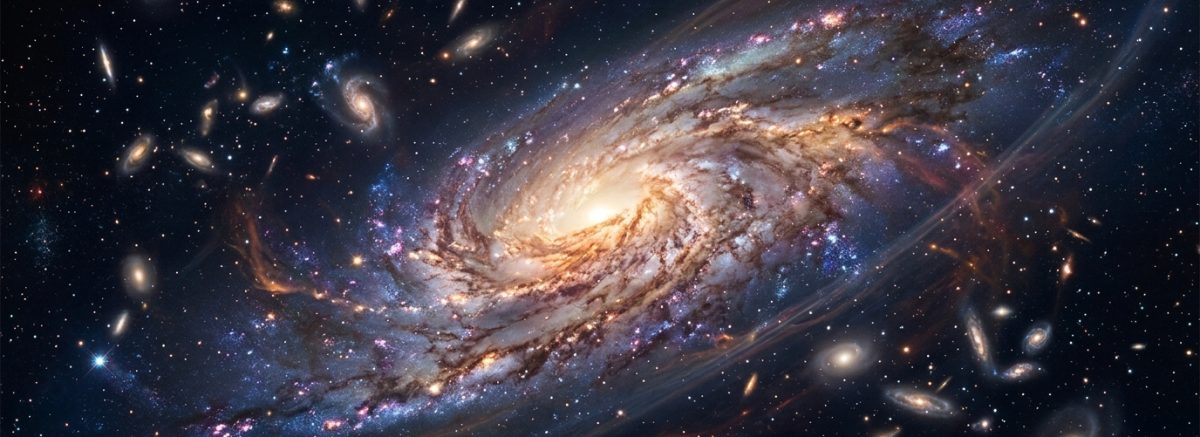
Hubble Observes M88 -A Marvelous Spiral Galaxy on a Cosmic Journey
Messier 88: A Transformative Path Through Space
Located approximately 60 million light-years from Earth in the Virgo Cluster, Messier 88 (M88) is a stunning spiral galaxy that is currently on an extraordinary trajectory. This galaxy is not only visually striking but is also fascinating from an astronomical standpoint, as it is racing through one of the most densely populated regions of the universe. The Virgo Cluster, which includes more than 1,300 galaxies, presents numerous gravitational forces and interactions that will significantly affect M88’s future.
At the heart of M88 resides a supermassive black hole with a mass equivalent to around 100 million times that of our Sun. This formidable entity plays a crucial role in the dynamics and evolution of the galaxy, influencing the motion of stars and gas within the galaxy’s vicinity. Supermassive black holes are generally found in the centers of galaxies, and they are believed to grow over time by accreting gas and merging with other black holes, ultimately shaping the galaxies structures.
M88 showcases elegant, winding spiral arms adorned with clusters of young stars, alongside regions densely packed with dark clouds of cosmic dust. These features contribute to the galaxys overall beauty and brightness, making it a popular target for astronomers and astrophotographers alike. The ongoing formation of new stars is a key aspect of M88’s current state; however, the galaxy is on the verge of undergoing significant transformation.
As M88 moves deeper into the gravitational pull of the Virgo Cluster over the next few hundred million years, it will encounter powerful galactic interactions that are expected to strip away much of the gas necessary for star formation. This phenomenon, known as ram-pressure stripping, occurs when a galaxy moves through a dense environment at high speeds, causing its gas to be expelled. Without this gas, M88’s ability to create new stars will be severely diminished, leading to a gradual cessation of star production.
Furthermore, scientists are particularly interested in how such interactions influence the long-term evolution of spiral galaxies. Observations of similar galaxies in the Virgo Cluster have shown that they can experience varying degrees of star formation cessation based on their interactions with neighboring galaxies. This makes M88 a valuable case study for understanding the broader dynamics and life cycles of galaxies in a cluster environment.
As astrophysicists continue to study Messier 88 and its unique position within the Virgo Cluster, they are provided with an exceptional opportunity to learn more about the fate of spiral galaxies and the broader cosmic evolution. Observations from advanced telescopes, including the Hubble Space Telescope and upcoming progress from next-generation observatories, will help illuminate the intricate processes that govern not only M88’s transformation but also the evolutionary patterns of galaxies across the universe.
In conclusion, while M88 is currently a magnificent spiral galaxy filled with young stars and cosmic dust, its imminent journey into the gravitational heart of the Virgo Cluster poses fundamental questions about its future and the nature of galaxy evolution in a crowded cosmic environment.
Warning: file_get_contents(https://api.ip2location.io/?key=A6F666A7EABBBC0B9012FAFB1E13A53A&ip=216.73.216.182): Failed to open stream: HTTP request failed! HTTP/1.1 403 Forbidden in /home/m1newsdesk/public_html/wp-content/themes/colormag-pro/content-single.php on line 201