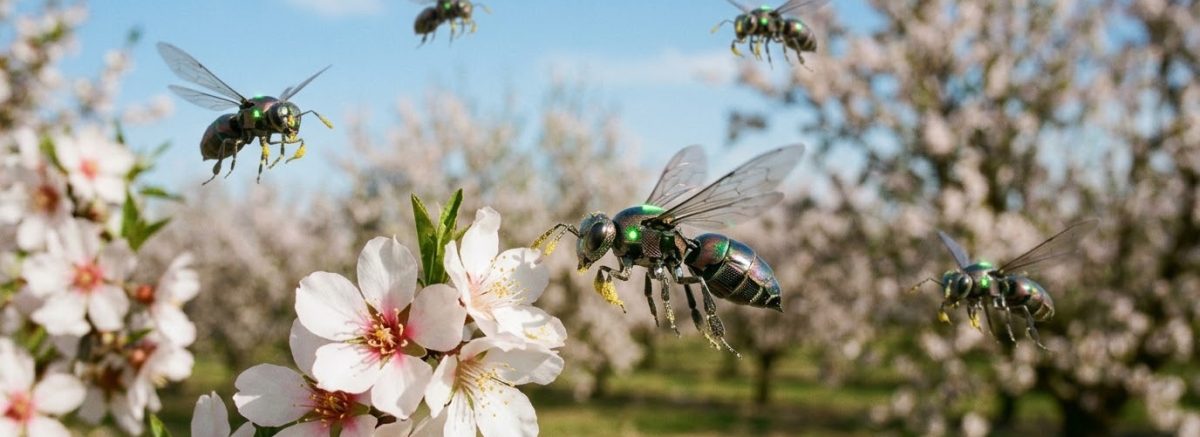
“Advancements in Robotic Insects May Enhance Mechanical Pollination Efforts”
In a significant advancement in the field of robotics and engineering, researchers have developed new insect-scale microrobots capable of flying over 100 times longer than their predecessors. This breakthrough represents not only a substantial increase in flight endurance but also enhancements in speed and agility when compared to earlier microrobot models.
The new microrobots, designed to mimic the flying patterns and capabilities of insects, are equipped with advanced technology that allows them to navigate through challenging environments with improved efficiency. Their lightweight structure, coupled with innovative propulsion mechanisms, facilitates prolonged flight times, enabling the robots to cover greater distances without necessitating frequent recharges or landings.
One of the primary potential applications for these microrobots is in agriculture, specifically for the pollination of fruits and vegetables. As global populations rise and agricultural production needs escalate, traditional pollinators such as bees face threats from habitat loss, pesticides, and disease. The decline of pollinator populations has raised alarms over the potential impact on food production and biodiversity. In this context, the deployment of these microrobots could serve as a promising alternative for effective pollination, helping to alleviate the pressures faced by natural pollinators.
In addition to their agricultural use, these microrobots may also find applications in other areas, including environmental monitoring, search and rescue missions, and medical delivery systems. Their ability to access hard-to-reach areas or enter environments unsafe for humans positions them as valuable tools for various industries.
Researchers have employed a multidisciplinary approach in the design and development of these machines, integrating concepts from biology, aerodynamics, and robotics. By studying the flight mechanics of insects such as bees and flies, the team has been able to replicate their wing flapping motions, which is crucial for achieving the level of agility necessary for navigation.
As development continues, scientists aim to enhance the robots further, particularly focusing on improving their sensing capabilities and communication systems. This progression is essential as it would allow the microrobots to interact with each other and their environment more effectively, paving the way for potential swarming behavior, similar to that observed in natural insect hives.
While these microrobots are still in the experimental stage, the promising features they exhibit could herald a new era in robotics, particularly for applications in agriculture and environmental sustainability. As research progresses, it will be crucial to explore the regulatory and ethical implications of deploying these robots in natural ecosystems and agricultural settings, ensuring that their introduction complements existing ecological systems rather than disrupts them.
In summary, the innovation represented by these new insect-scale microrobots exemplifies the growing convergence of technology and nature, and they hold potential that could significantly impact food security and ecological conservation efforts in the future.