“New Insights Suggest Potential Existence of Conscious Life Beyond Our Current Understanding”
The concept of consciousness has long captivated the minds of philosophers and scientists alike, prompting profound questions about the nature of awareness and the substrates that could potentially give rise to it. A recent discussion by philosophers Eric Schwitzgebel and Jeremy Pober explores this very topic, suggesting that consciousness may not be an exclusive phenomenon confined to brains as we understand them on Earth. Instead, they propose that consciousness could manifest in a multitude of forms across a diverse range of life, including entities constructed from materials drastically different from those found on our planet.
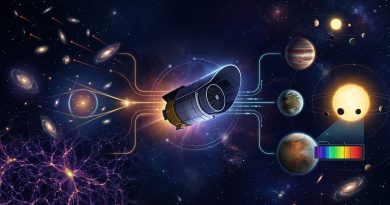
In their argument, Schwitzgebel and Pober emphasize the vastness of the universe, which houses billions of galaxies, each potentially containing millions or even billions of planets. Given the expansive nature of the cosmos, they argue that the possibility of alien civilizations thriving in environments and conditions vastly dissimilar to Earth is not just likely but almost inevitable. Thus, its deemed surprisingly Earth-centric to assume that only life forms resembling terrestrial biology could possess consciousness.
The traditional view of consciousness often revolves around biological structures resembling the human brain, which processes information and engenders self-awareness. However, Schwitzgebel and Pober invite a re-examination of what constitutes a conscious being. Their perspective raises intriguing questions about the qualities necessary for consciousness and suggests that such attributes might extend beyond neurobiological configurations.
For example, could alternate forms of consciousness be found in silicon-based life forms that might exist on other planets? Or could consciousness arise in complex systems of artificial intelligence that function within digital environments? They point out that human beings have historically limited the definition of consciousness to the experiences we are familiar with, namely those associated with human and animal physiology.
This viewpoint amplifies the conversation around the philosophy of mind and the nature of consciousness. It postulates that consciousness might not be a singular phenomenon but rather a spectrum, encompassing a variety of experiences produced by different life forms or systems. Their arguments intertwine with ongoing debates in fields such as astrobiology and cognitive science, pushing the boundaries of how we think about consciousness and its potential manifestations.
In conclusion, the commentary by Schwitzgebel and Pober provokes deeper contemplation about the nature of sentience beyond our comprehension. As we continue to explore the vast universe, the possibility of encountering unfamiliar conscious entities prompts crucial questions about our understanding of consciousness itself, challenging us to rethink the definitions and limits we’ve imposed on the phenomenon. The implications of their argument not only influence philosophical discussions but also touch upon the future of scientific exploration, potentially shaping how we search for life beyond Earth and how we define our place within the cosmic tapestry.