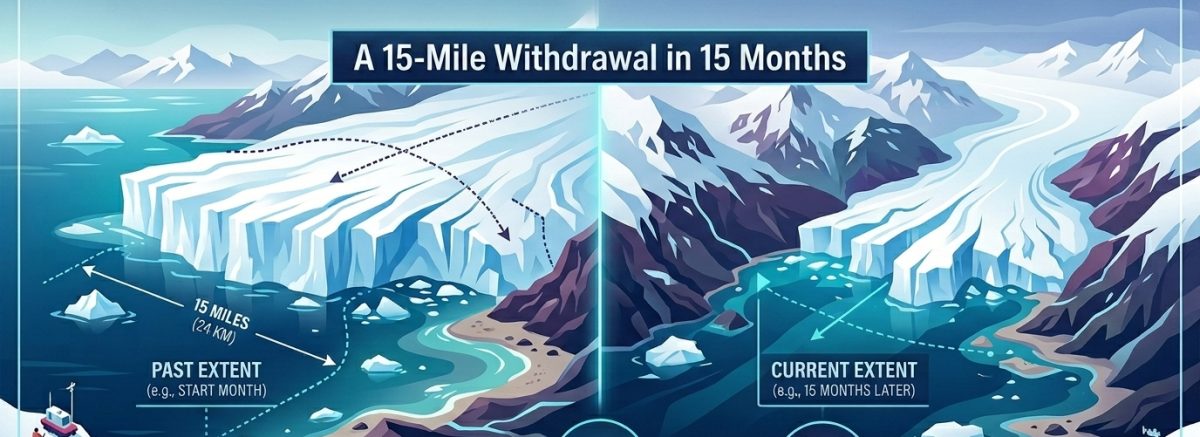
“Rapid Retreat of Hektoria Glacier: A 15-Mile Withdrawal in 15 Months”
**Rapid Collapse of Antarcticas Hektoria Glacier Sparks Alarm Among Scientists**
The Hektoria Glacier in Antarctica has recently exhibited a startling transformation, experiencing a rapid retreat of approximately 15 miles in just a span of 15 months. This phenomenon has set a new modern record for grounded ice loss, raising significant concerns among climate scientists and environmentalists alike. The unprecedented speed at which the glacier has retreated has been attributed to a combination of warming atmospheric conditions and instability exacerbated by ocean currents.
Historically, the Hektoria Glacier was perceived as relatively stable. However, shifts in the surrounding climate have led to an alarming acceleration in its melting. Scientists studying the effects of climate change in the region have observed that rising ocean temperatures are contributing to the destabilization of glaciers, including Hektoria. When warmer ocean waters come into contact with the glaciers ice shelves, melting can occur from below, accelerating the process of ice loss.
In addition to warming ocean waters, researchers highlight that the interplay between atmospheric temperatures and oceanic conditions has created a perfect storm for glacial melting in the area. These shifts may stem from broader climatic changes that are reshaping the Antarctic landscape. According to recent studies, the Antarctic Peninsula and surrounding areas are warming at a rate faster than the global average, leading to significant ecological impacts.
The consequences of glacier retreats such as that of the Hektoria Glacier extend beyond local environmental changes. Glacial ice serves as a significant freshwater reservoir. As these glaciers continue to melt, they contribute to global sea level rise, which poses a substantial risk to coastal communities worldwide. The potential for increased flooding and land erosion as sea levels rise is prompting a reassessment of coastal infrastructure and long-term urban planning strategies.
Additionally, the rapid melting of glaciers is anticipated to alter ocean currents, affecting marine ecosystems and climate patterns. Changes in salinity and temperature can disrupt breeding grounds for fish and other marine species, with potential ripple effects on global fisheries and food supplies.
The scientific community continues to monitor the situation closely. Researchers are utilizing satellite imagery and on-the-ground surveys to better understand the dynamics of the Hektoria Glacier and similar ice formations in Antarctica. The findings from these studies are expected to inform climate models and adaptive strategies in mitigating the impacts of climate change.
As global attention turns toward the growing crisis of climate change, the collapse of the Hektoria Glacier serves as a critical reminder of the urgent need for action. Understanding these processes is vital for developing effective response strategies, not only to address the immediate effects on polar environments but also to mitigate broader implications for our planet’s climate system. Continued research efforts and international cooperation will be essential in navigating this global challenge.
Image courtesy :