Public-Private Research Informs Gas Injection Setup in Innovative Fusion System
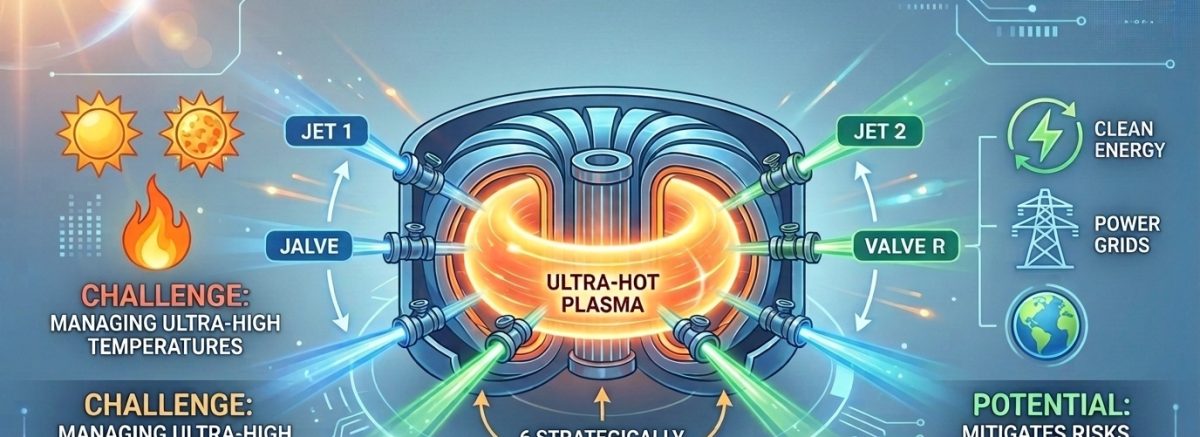
In a significant advancement in the field of nuclear fusion research, scientists have identified that six strategically positioned gas valves can effectively cool the extremely hot plasma within the SPARC (Sustainability of Plasma for Advanced Research and Control) reactor design. This breakthrough, made possible through sophisticated computer simulations, holds the potential to mitigate the risks associated with plasma damage, thereby edging fusion energy closer to practical application.
Fusion energy, which aims to replicate the natural processes powering the sun, has long been perceived as a promising alternative to traditional energy sources. It offers the allure of providing a virtually limitless supply of clean energy with minimal environmental impact. However, one of the primary challenges facing fusion energy has been the management of the ultra-high temperatures reached during the fusion process, which can exceed millions of degrees Celsius. These extreme conditions require innovative approaches to maintain plasma stability and integrity.
The research, conducted by a team of engineers and scientists at the Massachusetts Institute of Technology (MIT) and partnered with other institutions, demonstrated that the installation of these gas valves could play a critical role in maintaining the operational viability of a fusion reactor. When activated, these gas valves release a cooling agent that can quickly reduce the plasma temperature to prevent potential structural damage to the reactor’s walls. The rapid response capability provided by the valves is crucial for maintaining safety and efficiency in fusion reaction environments.
The computational models employed in this research allowed scientists to simulate various operational scenarios, improving their understanding of plasma behavior and thermal dynamics within the reactor. The findings suggest that the integration of such cooling systems could enhance the overall efficiency of fusion reactors, allowing for more sustained and controlled reactions.
This discovery comes at a time when global energy demands continue to rise, and the need for sustainable energy solutions has never been more pressing. Advances in fusion technology are gaining momentum with projects like SPARC, which is being developed as a compact, net-positive energy reactor. The ultimate goal is to create a fusion power plant that can contribute to the energy grid, potentially revolutionizing how electricity is generated and consumed.
The implications of these findings extend beyond technical feasibility; they underscore the importance of interdisciplinary research in addressing complex energy challenges. With further developments and testing, these cooling valves could become a standard feature in next-generation fusion reactors, paving the way for the broader acceptance and implementation of fusion energy as a reliable power source for future generations.
As researchers continue to explore the practicalities of fusion energy technology, this breakthrough serves as a beacon of hope for a future where clean, abundant energy is not just a theoretical concept but a tangible reality.
Array
(
    [ip] => 122.183.51.214
    [timezone] => Asia/Kolkata
    [country] => India
    [country_code] => IN
    [state] => Rajasthan
    [city] => Jaipur
)