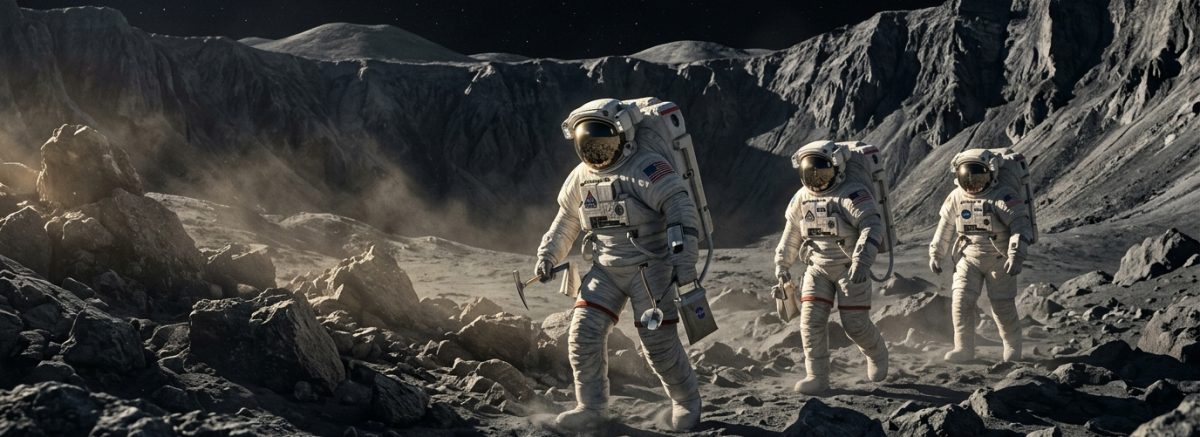
Future Astronauts May Explore Lunar Interior by Walking on Rocks
A fascinating discovery has emerged from new research regarding the Moon’s South Pole-Aitken (SPA) basin, the largest and oldest impact crater on the lunar surface. This basin has been a subject of scientific interest for years, but recent findings indicate that it might hold deeper secrets than previously thought, potentially close to future landing sites for NASAs Artemis program.
The South Pole-Aitken basin spans approximately 2,500 kilometers in diameter and reaches depths of over 13 kilometers, making it not only an impressive geological feature but also an invaluable opportunity for researchers studying the Moons composition and geological history. The basin was formed billions of years ago as a result of a colossal impact, and ongoing studies are aimed at understanding the nature of this ancient collision.
In an innovative effort to simulate the impact event that created the SPA basin, scientists conducted a modeling study that replicates the conditions of the ancient collision. The study suggests that a low-angle strike from a large, iron-cored object—akin to an asteroid or a sizeable celestial body—was responsible for displacing material from deep within the Moons crust and mantle. This finding is significant as it indicates that the impact not only resulted in the formation of the basin but also unearthed mantle rocks that had been previously hidden beneath the lunar surface.
What makes this discovery particularly exciting is the prospect that the material excavated during this ancient collision may be relatively accessible for future missions. The Artemis program, which aims to return humans to the Moon by the mid-2020s and establish a sustainable presence, is likely to focus on landing near the South Pole. The possibility of retrieving samples from this area could provide scientists with invaluable insights into the Moon’s origin, evolution, and the formation of terrestrial planets.
The research, enhancing our understanding of lunar geology, emphasizes the importance of studying not only the surface but also the subsurface layers of the Moon. The samples collected could potentially help scientists draw parallels between the Moons geological history and that of Earth, enriching our knowledge of planetary formation and the processes that govern celestial bodies.
As the Artemis program prepares for its missions, the implications of this research could guide the selection of landing sites, ensuring that the exploration of the Moon yields the maximum scientific return. Continued investigations into the SPA basin will also aid future lunar missions, which aim to reveal the Moons secrets and enhance our understanding of its role in the history of the Solar System. The endeavor is as monumental as the celestial body it aims to explore, signifying a new chapter in human exploration and our quest to uncover the mysteries of the cosmos.