NASAs Roman Space Telescope Set to Revolutionize Astronomy
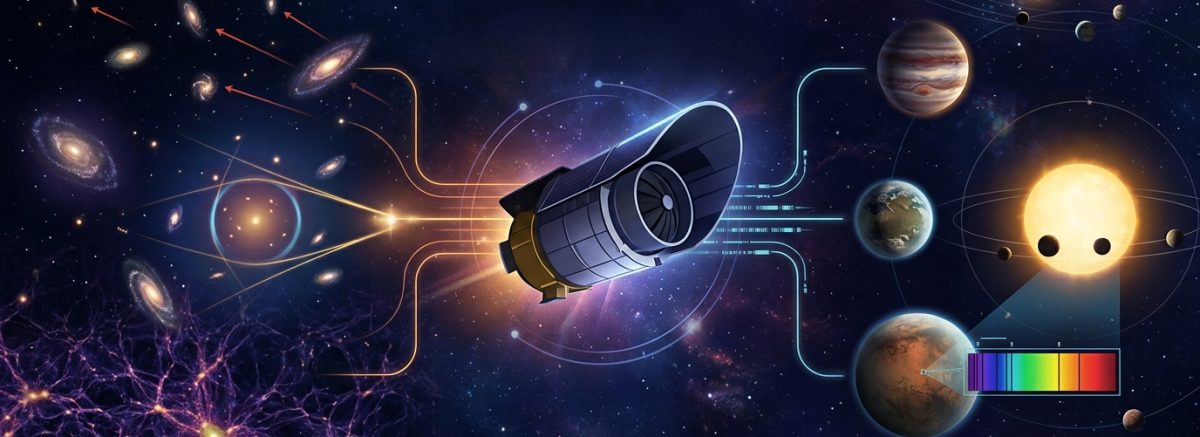
NASAs Nancy Grace Roman Space Telescope (Roman) is on track for an anticipated launch in September 2026, a move that suggests the agencys commitment to advancing our understanding of the universe. Named after the first woman to hold a senior executive position at NASA, Dr. Nancy Grace Roman, this state-of-the-art observatory is specifically designed to address some of the most profound questions in modern astrophysics. It aims to explore the mysteries of dark matter, dark energy, and distant exoplanets, all of which play crucial roles in shaping our understanding of the cosmos.
The Roman telescope will significantly enhance our ability to conduct large-scale surveys of the universe. Equipped with a wide-field camera, it will be capable of capturing vast regions of the sky in unprecedented detail using infrared technology. This capability allows the telescope to observe celestial objects that might be obscured by dust or located at great distances, unveiling the hidden structures of the universe. Scientists expect Roman to detect hundreds of millions of galaxies during its mission, opening pathways to explore new cosmic phenomena that have yet to be seen.
One of the key features of the Roman Space Telescope is its ability to probe the properties of dark energy, a mysterious force believed to be driving the accelerated expansion of the universe. With its advanced observational technologies, Roman will gather data that could help elucidate the nature of dark energy, significantly impacting our understanding of cosmology.
In addition to its focus on dark matter and dark energy, the Roman telescope is set to conduct exoplanet surveys that will search for planetary systems in the habitable zones of stars. By identifying new exoplanets, including those that may support life conditions, Roman promises to enhance our knowledge of planetary formation and evolution. The telescopes findings could redefine our understanding of where life might exist beyond Earth.
The extensive data generated by the Roman Space Telescope will create an immense archive that astronomers and researchers can access for decades to come. The implications of Romans discoveries are anticipated to resonate throughout the scientific community, potentially reshaping our astronomical paradigms and prompting new inquiries about the universe.
As NASA progresses towards the September 2026 launch, the anticipation surrounding the Roman telescope continues to grow. By increasing our capacity to explore the cosmos, the Roman Space Telescope is expected to provide transformative insights into the nature of the universe, ultimately enhancing humanity’s quest for knowledge about our place in it. In preparation for this milestone mission, NASA is actively engaging with a global scientific community to ensure the effective use of the data Roman will gather, fostering collaboration and innovation in astronomical research.