Antarctic Melting Accelerates from Below, Researchers Report More Severe Impacts than Anticipated
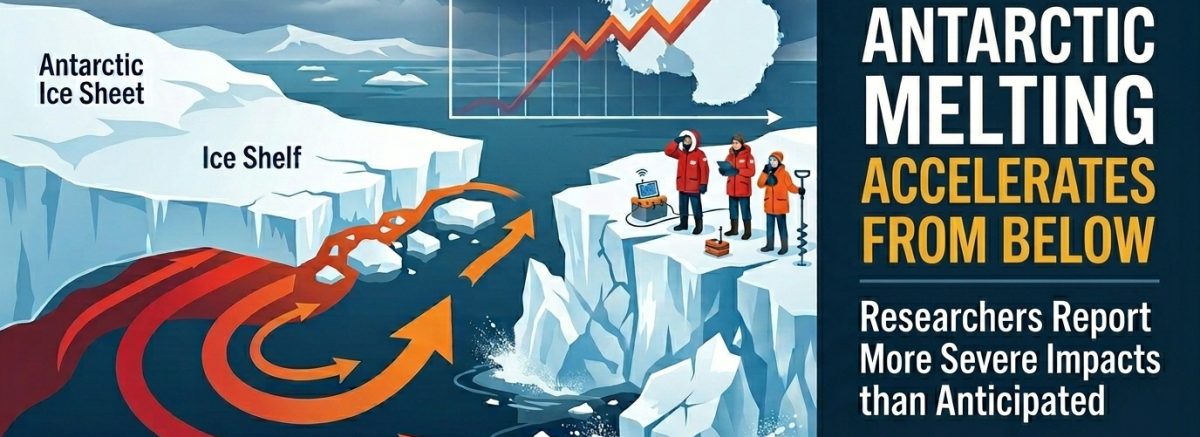
Recent research has brought to light a concerning phenomenon beneath the icy expanse of Antarctica that has the potential to significantly accelerate global sea level rise. Scientists have discovered extensive, hidden channels situated deep beneath the ice shelves of Antarctica, which appear to trap increasingly warmer ocean water. This phenomenon intensifies the melting of the ice from below, pointing to a more urgent situation than previously anticipated.
Historically, East Antarctica was considered relatively stable compared to its West counterpart, which has been under scrutiny due to its susceptibility to climate change. However, this new study suggests that even regions of East Antarctica, previously thought to be secure, may be at a heightened risk. The channels serve as conduits, allowing warmer water from the ocean to reach the base of the ice shelves, thus significantly enhancing the melting process which can have widespread implications.
The study, conducted by a team of researchers from various institutions, utilized advanced imaging technology and modeling techniques to map these hidden channels. What they found was alarming: the amount of warm water the channels can transport is far greater than current climate models have accounted for. This oversight raises concerns that projections regarding future sea-level rise may be substantially underestimated, given that the melting caused by this process could lead to a considerable influx of freshwater into the oceans.
The implications of these findings extend beyond rising sea levels. Coastal populations globally may face increased flooding, erosion, and related issues, significantly impacting ecosystems and human developments alike. The stakes are particularly high for major cities that are situated along coastlines, where even minor increases in sea levels can lead to devastating consequences.
In light of this research, scientists emphasize the urgent need to revise climate models to incorporate these newfound dynamics. A better understanding of how these channels operate and influence melting will be crucial for creating more accurate predictions for sea-level rise. Furthermore, this research underscores the importance of international cooperation and concerted efforts to address climate change, as the effects of these changes will undoubtedly transcend national borders.
As global temperatures continue to rise and climate change accelerates, the study of Antarctic ice dynamics becomes increasingly critical. It not only represents a key area of research in our understanding of the changing climate but also serves as a clarion call for action to mitigate the impacts of climate change on the planet’s ecosystems and human communities.