Enhanced Coffee Strength Achieved with Reduced Bean Usage
**Optimizing Pour-Over Coffee with Coffee Grounds: Insights from Recent Research**
Recent research has focused on enhancing the brewing process of pour-over coffee by optimizing the utilization of coffee grounds. This innovative study, rooted in the pursuit of stronger and more flavorful coffee, highlights the importance of specific pouring techniques and equipment.
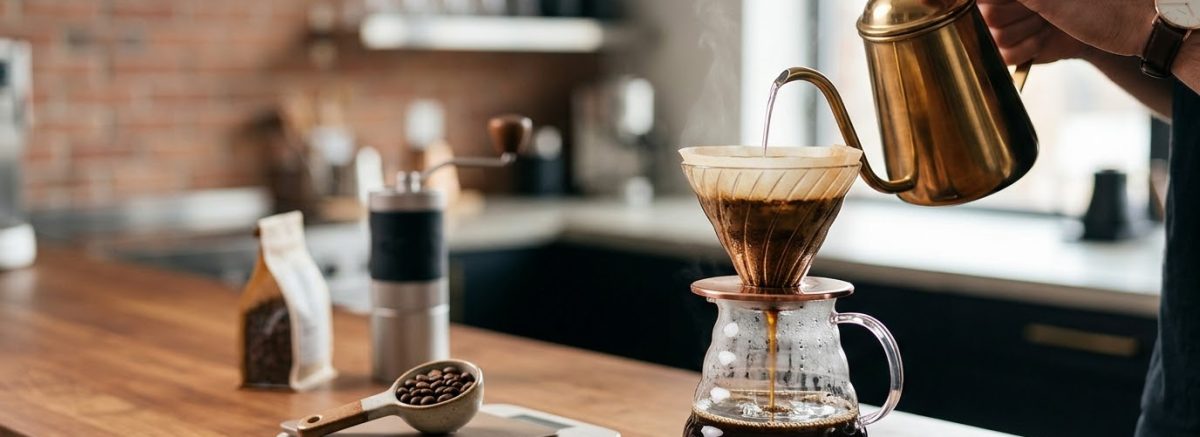
Pour-over coffee, a favored brewing method among coffee enthusiasts, requires the user to manually pour hot water over coffee grounds in a filter. According to the findings, the technique employed during the pouring stage significantly influences the extraction of flavors from the coffee grounds. Researchers recommend pouring the water from as high as possible while still maintaining an effective flow rate. This method not only enhances the extraction process but also enriches the overall flavor profile of the brewed coffee.
One of the key aspects of the study revolved around the use of standard gooseneck kettles, which are known for their precision pouring capabilities. The researchers noted that the thick jets of water produced by these kettles are particularly effective in achieving the necessary height and laminar flow during the brewing process. Laminar flow refers to the smooth, straight-line movement of water, which is essential for evenly saturating the coffee grounds. When water is poured from a significant height, it creates a more powerful jet that disrupts the surface of the coffee bed more effectively.
The research team discovered that the force of the water jets contributes to the displacement and recirculation of coffee grounds. This is a vital component of the brewing process, as it allows the water to delve deeper into the coffee bed, ensuring that the grounds are evenly saturated. Enhanced mixing between the water and the coffee grounds leads to a more complete extraction of essential flavors, resulting in a stronger cup of coffee while also using fewer beans compared to traditional brewing methods.
In addition to the pouring technique, the study suggests that coffee enthusiasts should also consider factors such as water temperature and grind size. Ideal brewing temperatures typically range between 195°F to 205°F, and the grind size should match the pour-over method ideally, usually a medium to medium-fine consistency. By fine-tuning these variables alongside the recommended pouring technique, coffee lovers can optimize their brewing process for a richer coffee experience.
In conclusion, this research provides valuable insights for both casual coffee drinkers and aficionados looking to improve their pour-over brewing methods. By understanding the dynamics of water flow, the behavior of coffee grounds, and the optimal use of equipment, users can enhance their ability to produce stronger, more flavorful coffee. Ultimately, the study encourages further exploration into the art and science of coffee brewing, opening the door for ongoing experimentation within the coffee community.