RoboBee Successfully Completes Landing Maneuver
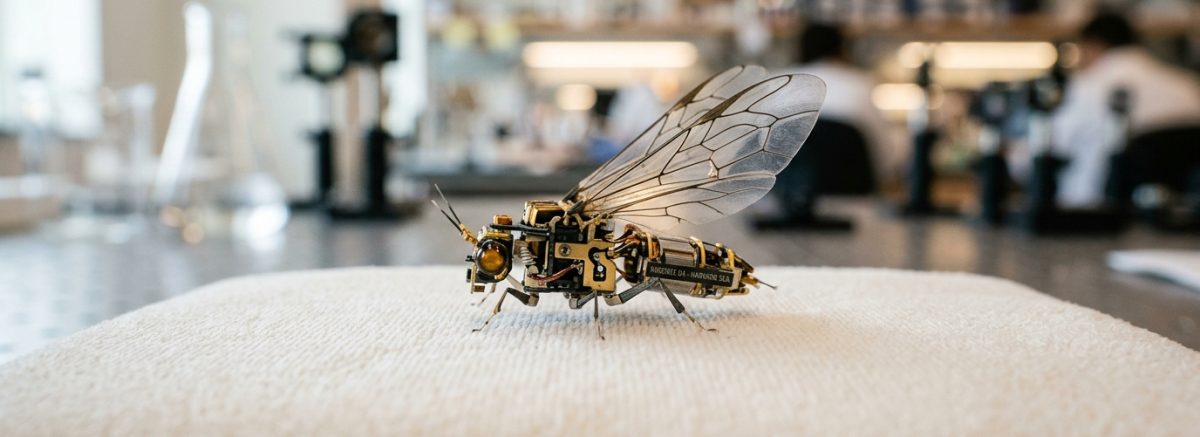
In a noteworthy advancement in robotics and biomimicry, researchers have recently unveiled an updated version of the RoboBee, a flying robot designed to mimic the functionality and finesse of real insects. This innovative iteration is now equipped with an enhanced landing gear system inspired by the crane fly, a creature recognized for its elegant and adept landing capabilities.
The newly designed landing gear features long, jointed legs that not only give the RoboBee a resemblance to its natural counterpart but also facilitate a smoother transition from aerial flight to ground landing. The integration of these legs enables the robot to absorb shocks upon touchdown, thereby minimizing the risk of damage during landing. This engineering feat is significant given the delicate nature of robotic components and the challenges of achieving stable and precise landings in dynamic environments.
The development team has also incorporated an advanced control system that enhances the RoboBees ability to decelerate as it approaches its landing zone. This updated controller utilizes algorithms that carefully calculate the descent rate, allowing the robot to achieve a gentle plop-down onto the surface. The ability to modulate descent speed is critical in ensuring that the RoboBee can land safely on various terrains and surfaces, which could include everything from urban rooftops to natural habitats.
The implications of this advancement reach far beyond just robotic flight. As bees and other pollinators face declining populations, the RoboBee technology may be harnessed for environmental monitoring and even crop pollination in the future. With the ability to mimic the landing finesse of a crane fly, scientists are exploring potential applications that could aid agriculture and ecological studies.
Furthermore, this development contributes to ongoing research in aerial robotics, a field that has seen increasing interest in recent years for its potential to revolutionize industries such as logistics, delivery systems, and environmental surveillance. The refined design of the RoboBee represents a significant stride toward creating more adept and versatile flying robots that could operate effectively in complex environments.
In summary, the latest iteration of the RoboBee, with its nature-inspired jointed legs and improved control system for landing, exemplifies the successful fusion of biology and technology. As researchers continue to innovate, the RoboBee stands at the forefront of developments in robotics, paving the way for future solutions in various sectors while simultaneously drawing inspiration from the natural world.