Accelerating and Reducing Costs of CO2 Conversion to Clean Fuel
**Breakthrough Catalyst Transforms CO2 into Carbon Monoxide with Unprecedented Efficiency and Stability**
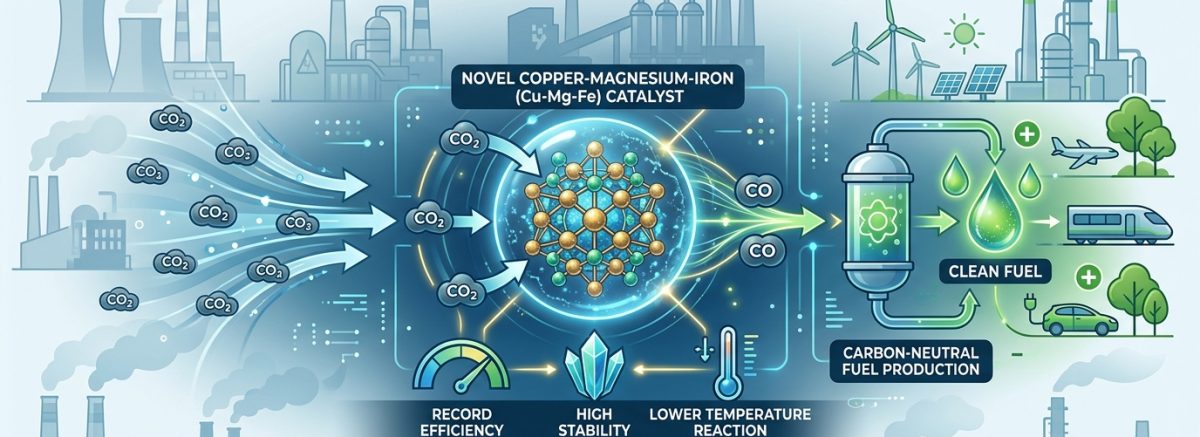
In a significant advancement towards combating climate change, researchers have developed a novel copper-magnesium-iron catalyst that effectively converts carbon dioxide (CO2) into carbon monoxide (CO) at lower temperatures than previously possible. This breakthrough, heralded for its record-breaking efficiency and stability, could play a critical role in the production of carbon-neutral synthetic fuels, providing a pathway to more sustainable energy solutions.
The ongoing reliance on fossil fuels for energy generation remains a major contributor to greenhouse gas emissions, prompting the need for innovative technologies to mitigate climate change. Among various approaches, converting CO2 back into usable energy forms is increasingly being recognized as a viable strategy. The newly discovered catalyst operates at lower temperatures compared to traditional methods, which often require higher energy inputs, making the process not only more efficient but also more cost-effective.
Developed by a team of researchers, this catalyst leverages a unique combination of copper, magnesium, and iron. The design focuses on enhancing the catalytic properties that facilitate the transformation of CO2 to CO, a key intermediary in the synthesis of various carbon-based fuels. The catalyst’s stability under operational conditions is particularly noteworthy, as many existing catalysts suffer from degradation or reduced efficiency over time. This durability ensures the practical applications of the catalyst in real-world scenarios, where longevity is essential for commercial viability.
In addition to its impressive performance metrics, the research highlights the catalyst’s scalability, a crucial factor for transitioning laboratory innovations into industrial applications. Economic viability is a significant barrier in the adoption of new technologies, and the ability to produce this catalyst at scale could lower production costs for synthetic fuels and make them competitive with conventional fossil fuels.
Synthetic fuels, produced sustainably through carbon capture and conversion, hold potential for reducing reliance on fossil fuels while providing energy security. They can be utilized in existing infrastructure, minimizing the need for extensive modifications to current technologies. If widespread adoption occurs, this could substantially reduce carbon emissions across multiple sectors, including transportation and manufacturing.
The findings from this research are expected to spark further studies and innovations in the field of carbon capture and conversion technologies. As scientists aim to optimize the catalyst and explore additional material combinations, the quest for low-cost, green energy solutions continues to evolve.
Overall, the development of this copper-magnesium-iron catalyst represents a promising stride towards achieving carbon-neutral energy systems. By enabling the efficient transformation of CO2 into usable carbon monoxide, this innovation could play a pivotal role in the development of sustainable fuel sources, contributing to global efforts in reducing greenhouse gas emissions and combating climate change. As research progresses, it is imperative to monitor the practical implementation of these technologies to ensure they can be integrated into existing energy frameworks effectively.