NASAs Fermi Telescope Identifies Power Source of Massive Supernovae
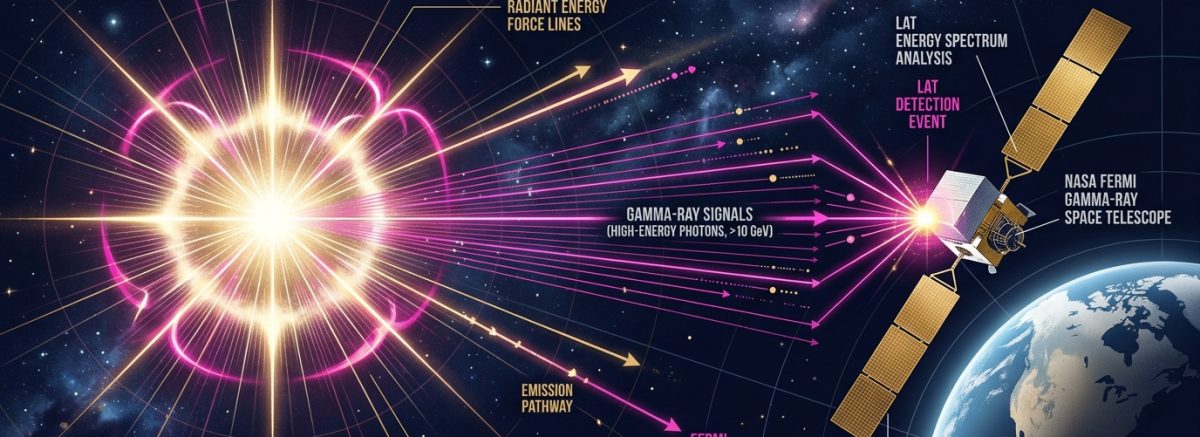
NASA’s Fermi Gamma-ray Space Telescope has made a remarkable discovery that could significantly enhance our understanding of superluminous supernovae, some of the brightest explosions observed in the universe. After extensive observation, the telescope has identified what is believed to be the first confirmed gamma-ray signal emitted from a superluminous supernova, designated SN 2017egm. This astronomical event took place approximately 440 million light-years away in the galaxy NGC 1637, providing researchers with invaluable data on these extraordinary phenomena.
Superluminous supernovae are distinguished by their exceptional brightness, often outshining entire galaxies for a brief period. They occur infrequently, and their underlying mechanisms are not yet fully understood. This recent observation of SN 2017egm provides crucial insights into the potential processes that drive these colossal explosions. Scientists propose that the genesis of this supernova may be linked to a rapidly spinning magnetar, a type of neutron star that possesses extremely powerful magnetic fields. Magnetars usually have rotation periods ranging from milliseconds to several seconds, contributing to their intense energy emissions.
The implication of discovering gamma-ray emissions in association with SN 2017egm is significant. Gamma rays are the highest-energy form of electromagnetic radiation, and their presence typically indicates energetic processes at play during a stellar explosion. The detection of such emissions suggests that the explosion was not only energetic but could also provide clues about the mechanisms fueling the brightness of superluminous supernovae. Researchers are keen to further analyze the data collected, as understanding the role of magnetars will clarify the relationship between these neutron stars and the most powerful explosions in the universe.
The detection adds another layer to our understanding of stellar evolution and the life cycles of massive stars. Traditionally, supernovae are seen as the final awe-inspiring act of a star’s life, but the unique characteristics of superluminous supernovae challenge existing models. The burst of energy observed from SN 2017egm may help to unravel why certain supernovae arise and how they differ from regular supernovae.
Future studies involving the collected data from the Fermi telescope, alongside observations from ground-based telescopes, will be essential for a deeper investigation. By correlating the gamma-ray emissions with optical and infrared observations, scientists strive to piece together a more comprehensive picture of the supernovas explosion, its progenitor star, and the ultimate fate of such massive stellar bodies.
In summary, the detection of a potential gamma-ray signal from the supernova SN 2017egm highlights a significant stride in astrophysical research. It opens new avenues for exploring the mechanisms behind superluminous supernovae and their broader implications for the cosmic environment. As further studies unfold, they could reshape our understanding of stellar phenomena and contribute to our knowledge of the universe’s most violent and energetic events.